About
Latarence Butts, Ph.D.
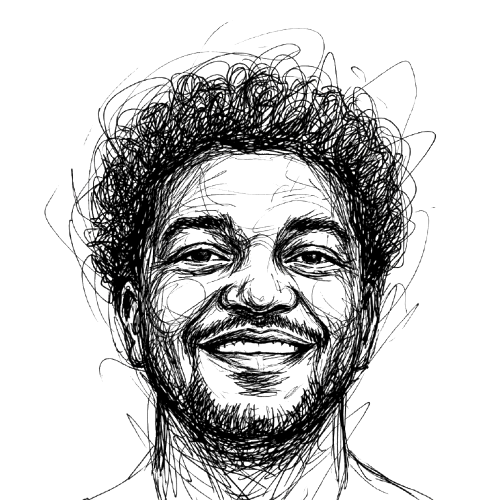
Dr. Butts is a research scientist, engineer, and founder whose work spans the full spectrum from fundamental device physics to field-deployed operational systems. His career is defined by the ability to translate deep technical research into real-world capability, taking systems from theory through experimentation to operational deployment and mission execution. Raised in Palm Beach County, Florida, Dr. Butts earned his B.S. in Electrical Engineering from the FAMU–FSU College of Engineering, graduating with a near-perfect GPA and receiving the Black Engineer of the Year (BEYA) Student Academic Award. He went on to complete his Ph.D. in High-Frequency Devices at the University of Arkansas under the mentorship of leading researchers in RF and power electronics.
His doctoral work produced foundational contributions to millimeter-wave device theory and radar systems, including the invention of the Double Gunn Diode, a novel device architecture that extends the tunable frequency range of microwave oscillators. In parallel, he led university research efforts within the Honeywell FM&T Radar Consortium, directing the design and fabrication of advanced W-Band and K-Band radar transceivers, as well as pioneering innovations in LTCC packaging and embedded electromagnetic shielding.
Dr. Butts transitioned from academia into operational research, serving as Director of Experimentation and Deputy Principal Investigator at Xtremis AI. There, he built and led the activation of the Devil's Den Proving Ground—a 600-acre isolated RF research facility developed from a former nuclear test reactor site. He directed multidisciplinary teams across engineering, defense, and intelligence domains, executing more than $80 million in U.S. Army-funded programs focused on AI-driven spectrum characterization and electronic warfare systems. His work extended beyond controlled environments, including deployments to operational theaters in support of Special Operations forces.
Today, his work spans multiple fronts: leading independent engineering engagements through Ridgefield LLC, advancing applied AI and simulation research through Huntington Applied, and building workforce and education pathways through The Signals Institute. Across these efforts, he focuses on developing both technical infrastructure and human capability—creating systems and organizations that perform under real conditions.
Before his career in science and engineering, Dr. Butts was a two-time All-State basketball player in Florida and an ESPN Player of the Week. That early experience in high-performance competition continues to inform his approach to leadership, execution, and team building.
Reach Out
Available for speaking engagements, research collaborations, and technical advisory roles.